The Medieval Heater Shield: History and Craftsmanship
The medieval heater shield is one of the most recognizable symbols of the European Middle Ages. Emerging in the late 12th and early 13th centuries, it evolved from the larger kite shield used by Norman knights and other early medieval warriors. Its distinctive shape—a broad upper section tapering to a pointed bottom—offered a practical balance between protection, maneuverability, and weight.
The name heater shield comes from its resemblance to the flat irons once used to heat clothing. Although its shape became familiar throughout the medieval period, the shield’s design varied over time, reflecting changes in armor, weapons, and fighting techniques.
The Shield of Knights and Heraldry
By the 13th century, the heater shield had become closely associated with knights and the developing tradition of European heraldry. Shields were decorated with bold colors, geometric patterns, animals, crosses, and other symbols that identified their owners and families.
Beyond its battlefield purpose, the shield became an important expression of identity, loyalty, and status. Its distinctive outline remains familiar today in coats of arms, historical illustrations, and representations of medieval knighthood.
Traditional Construction
Historically, heater shields were commonly made from wood, often reinforced with layers of fabric or other materials and covered with leather or painted cloth. Their faces were commonly shaped with a curve to improve rigidity and help deflect blows. Varying configurations of grips on the reverse allowed the shield to be controlled, and many shields also featured a ‘guige’ strap, for carrying purposes.
As plate armor improved and military tactics changed during the later Middle Ages, the heater shield gradually became less central to the equipment of heavily armored knights. Nevertheless, it continued to hold an important place in tournaments, ceremonial traditions, and heraldic art.
Bringing Medieval Craftsmanship to Life
Recreating a heater shield offers a practical way to explore medieval weaponry, while at the same time, incorporating more modern ideas of woodworking. e.g. the usage of layered wood(plywood). By shaping plywood into the shield’s characteristic outline and carefully forming a gentle curve, we can capture much of its distinctive appearance.
The result is more than a wooden object. It is an opportunity to connect with a centuries-old tradition of design, craftsmanship, and medieval history.
A note about the guige strap
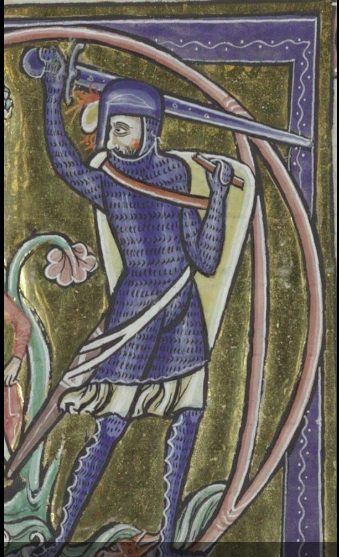
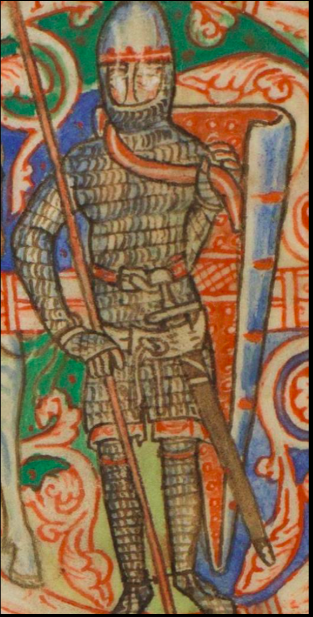
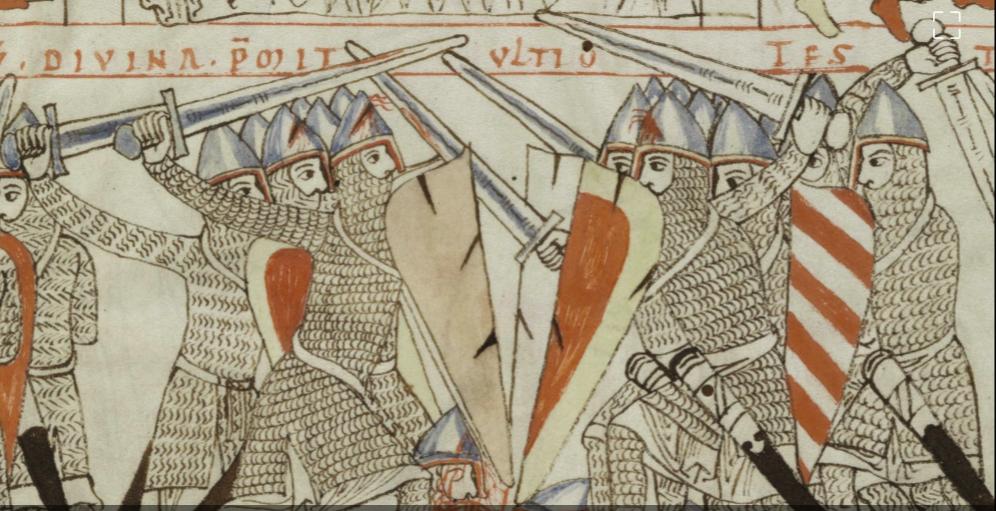
The guige strap is seen in various manuscripts, as a means of supporting the shield in combat, as well as during travel.
It is interesting to consider the early use of the strap. Before the advent of heavy plate armour, the shield needed to protect a large area of the warriors body, which natually caused the shield itself to be relatively heavy. In order to facilitate usage of the shield effectively, the guige provided that means of relief, which is shown in many old artistic examples, such as we see here: